When School Starts and the Struggles Come Back: Sanare’s Advice for Bucks County Parents
That September shift — when a happy summer kid suddenly struggles again — isn’t a sign that all the progress is gone. Sanare explains what’s really happening and when to get more help.

Sanare serves Bucks County families with locations in Yardley and Doylestown, and in virtual sessions with families across the county. Every fall, their clinicians see the same pattern: a child who seemed genuinely happy all summer starts struggling again the moment school resumes. For parents watching it happen, it can feel like all the progress they worked for has disappeared. It usually hasn’t.
What Bucks County Families Are Seeing Every September
September arrives and something shifts. The child who laughed easily all summer is suddenly harder to reach. Mornings become a battle. After-school meltdowns return. The ease that defined July feels very far away.
That sinking feeling — like all the progress has evaporated — is one of the most common issues parents describe. But a child who struggles in September isn’t necessarily back at square one. Those struggles provide information about what a child is still working to master, and what kind of support might help them carry it more easily.
The Assumptions That Make September Harder Than It Has to Be
Every fall, the Sanare team hears the same worries from parents. These thoughts that feel reasonable can sometimes point families in the wrong direction.
If they were fine all summer, the problem went away.
Think about what summer takes off a child’s plate: early alarms, academic pressure, navigating friendships all day, sitting still, keeping it together for hours. School puts all of that back at once. Symptoms returning isn’t failure — it’s the environment changing.
They just need a few weeks to adjust.
Sometimes. But frequent physical complaints, school avoidance, significant changes in sleep or appetite, and withdrawal from friends are patterns worth addressing, not waiting it out.
The teacher says they’re doing great, so this must be a behavior problem at home.
Both can be true. Some children spend enormous energy holding it together at school. By the time they reach home, they have very little left.
If they need help again, all the progress we made is gone.
Progress isn’t fragile. A child who built real skills over the past year still has them. Needing more support now means they’re being asked to use those skills under harder conditions, which is actually what growth requires.
“The most rewarding part of this program was seeing my daughter’s enthusiasm and growth as she learned skills to manage the anxiety that had affected her academics, social interactions, and confidence. She proudly shared “before and after” examples of how she would handle situations differently, showing the progress she made. It is not easy to find effective solutions for childhood anxiety, which makes this experience especially meaningful. I am deeply impressed by the team’s care, expertise, and dedication. Their support has made a lasting impact on both my daughter’s life and my own.”
– Stephanie M.
Knowing When to Ask for More Help
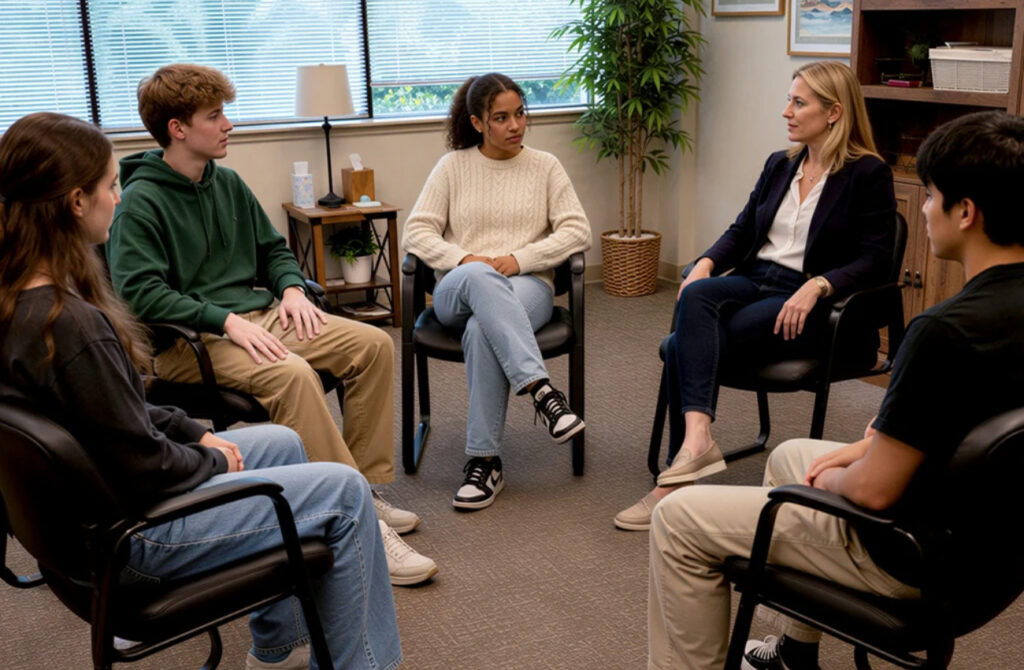
For some families, support from school and home is enough. When symptoms are significantly interfering with daily functioning, more structured care — such as an Intensive Outpatient Program or Partial Hospitalization Program — may be the right next step. Families can explore all options on Sanare’s programs page or find answers to common questions on the FAQs page.
“Sometimes we get really good at operating at 10% battery. We conserve energy, shut things down, and find ways to keep going. But getting by isn’t the same as living fully charged. Seeking support means giving ourselves the space to reconnect, build resilience, and create more fulfilling days, not just for the start of the school year, but for the life beyond it.”
Kate Racine, LPC, NCC
Director of Product Operations
A September Struggle Isn’t the End of the Story
The goal at Sanare isn’t to get kids through another school year. It’s to help them build skills they can carry into whatever comes next. Families in Yardley and Doylestown can connect with the team at Bucks County locations, with virtual care available throughout Pennsylvania. Most major insurance plans are accepted; visit the insurance page to check coverage or get started at sanaretoday.com.
This Sanare story is featured in the Back to School Guide.
Sanare’s story supports the Bucks County Parent Community. Collaborate with us.